Crestabond M1-04SL
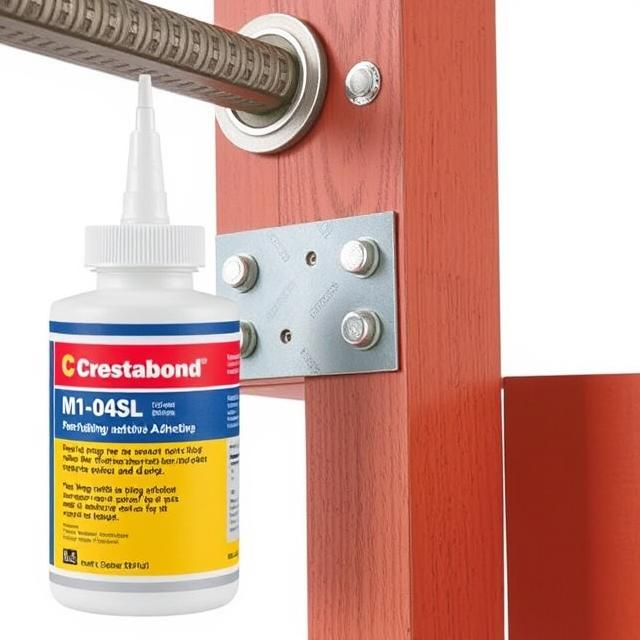
Crestabond M1-04SL, developed by Scott Bader, is a toughened, two-component 10:1 acrylic adhesive engineered for bonding composites, thermoplastics, and metals. This advanced structural methacrylate adhesive (MMA) is designed to meet the rigorous demands of modern assembly operations, offering exceptional impact, peel, shear, compressive strength, and fatigue resistance. With its primerless application and self-levelling rheology, Crestabond M1-04SL is particularly suited for heavy-duty applications, including battery cell bonding and encapsulation.
In this blog post, we’ll explore the key features, benefits, technical specifications, and application guidelines for Crestabond M1-04SL, making it an ideal resource for professionals seeking a high-performance bonding solution.
Key Features and Benefits
Crestabond M1-04SL combines efficiency and durability, making it a standout choice for structural bonding. Here are its primary features and benefits:
- Primerless Application: Eliminates the need for additional primers, reducing material costs and process time.
- Excellent Adhesion to Dissimilar Substrates: Bonds effectively to composites, thermoplastics, and metals, offering design flexibility.
- Fast Setting and Curing: Provides a working time of 4–7 minutes and a fixture time of 10–12 minutes, accelerating assembly.
- Self-Levelling Rheology: Ensures smooth application and uniform bondlines, ideal for precision bonding.
- High Strength and Toughness: Delivers superior mechanical performance for demanding structural applications.
- Excellent Environmental Resistance: Performs reliably in harsh conditions, with an operating temperature range of -40°C to 100°C (-40°F to 212°F).
- Shock and Vibration Resistance: Suitable for heavy-duty applications, including battery bonding and encapsulation.
- Gap Filling Capability: Accommodates bondline gaps from 1 mm to 5 mm (0.04–0.2 inches) for robust joints.
These attributes make Crestabond M1-04SL a versatile adhesive for industries requiring reliable, high-strength bonding.
Technical Specifications
Application Properties
| Property | Value |
|---|---|
| Working Time¹ | 4–7 minutes |
| Fixture Time² | 10–12 minutes |
| Gap Filling | 1–5 mm (0.04–0.2 inch) |
| Mixed Color | Grey |
| Recommended Application Temp | 18–25°C (64–77°F) |
¹ Measured with 9g mass of adhesive at 24°C (75°F).
² Defined at 23°C (73°F), achieving >1.4 MPa.
Mechanical Properties
| Property | Value |
|---|---|
| Tensile Strength³ | 16–20 MPa (2.3–2.9 ksi) |
| Tensile Modulus³ | 600–1000 MPa (87–145 ksi) |
| Tensile Elongation³ | >40% |
| Aluminium Lap Shear⁴ | 22–27 MPa (3.2–3.9 ksi) |
| Recommended Operating Temp⁵ | -40°C to 100°C (-40°F to 212°F) |
³ Tested to ASTM D638.
⁴ Tested to ISO 4587.
⁵ Maximum temperature where an ISO 4587 lap shear sample achieves >3 MPa.
Liquid Properties
| Property | Adhesive | Activator |
|---|---|---|
| Viscosity⁶ | 50–150 / 300–650 dPa.s | 100–300 / 300–1000 dPa.s |
| Specific Gravity | 0.96–1.02 g/cc | 1.05–1.15 g/cc |
| Mix Ratio (by Volume) | 10 | 1 |
| Mix Ratio (by Weight) | 9 | 1 |
| Color | Off-white | Black |
| Shelf Life⁷ | 12 months | 12 months |
⁶ Measured using HAKKE RV1 Rheometer at 25°C (77°F).
⁷ Defined from date of manufacture when stored as recommended.
Recommended Substrates
Crestabond M1-04SL is formulated to bond a wide range of substrates, with lap shear strengths varying by material. Below are the recommended substrates and their performance metrics:
Plastics
| Material | Lap Shear Strength⁴ |
|---|---|
| Acrylic | 20–24 MPa (Substrate failure) |
| PVC | 16–20 MPa (Substrate failure) |
| ABS | 13–17 MPa (Substrate failure) |
| Urethanes & Engineering Thermoplastics | Varies |
Note: For low surface energy plastics (e.g., PP, PE, PTFE), use Crestabond PP-04 instead.
Metals
| Material | Lap Shear Strength⁴ |
|---|---|
| Stainless Steel | 13–17 MPa (Cohesive failure) |
| Cold Rolled Steel (CRS) | 13–17 MPa (Cohesive failure) |
| Aluminium | 17–21 MPa (Cohesive failure) |
| Powder-Coated Metals, Carbon Steel, Zinc/Galvanized, Copper | Varies |
Composites
| Material | Lap Shear Strength⁴ |
|---|---|
| GRP/FRP | 8–12 MPa (Substrate failure) |
| Carbon Fibre, Polyester, DCPD-Modified Vinyl Esters | Varies |
| Epoxy | Test bond strength prior to application |
| Gelcoats | Surface preparation required |
Non-Recommended Substrates: Contact Scott Bader Technical Support for advice on other materials.
Surface Preparation
Proper surface preparation is essential for achieving strong and durable bonds with Crestabond M1-04SL. Follow these guidelines:
General Guidelines
- Remove oil, grease, dirt, or release agents using a degreasing agent (e.g., acetone or iso-propanol).
- Allow the solvent to fully evaporate before bonding.
- Mechanically abrade or chemically etch surfaces for enhanced durability, followed by a second degreasing step.
- Avoid using petrol, low-grade alcohol, or paint thinners.
Specific Substrates
- Metals:
- Clean with an alcohol/solvent wipe and ensure surfaces are dry.
- For metals like carbon steel, mechanical abrasion followed by solvent wiping may be necessary.
- Thermoplastics:
- Degrease with a suitable solvent (e.g., iso-propanol) to remove dust and contaminants.
- Ensure surfaces are clean and dry before bonding.
- Composites:
- Use peel-ply or solvent cleaning to achieve a dust-free, dry surface.
- For laminates older than 3 days, clean with a lint-free cloth and solvent.
- Mechanically abrade gelcoat or molded surfaces to remove release agents.
- Test bond strength for epoxy laminates prior to application.
Application Instructions
To achieve optimal results with Crestabond M1-04SL, follow these application steps:
- Surface Preparation:
- Clean substrates thoroughly as per the guidelines above.
- Confirm surfaces are dry and free of contaminants.
- Dispensing:
- Use well-maintained bulk dispensing equipment.
- Dispense adhesive slowly onto a non-bonding surface until the mixed bead is uniform in color (grey).
- Verify cure quality before proceeding.
- Bonding:
- Apply sufficient adhesive to fill the bond gap (1–5 mm).
- Mate parts with adequate pressure to avoid dry bonds.
- Clamp parts to prevent movement during curing.
- Complete bonding within the 4–7 minute working time.
- Temperature Considerations:
- Maintain adhesive, activator, and substrates at 18–25°C (64–77°F).
- Ambient temperature, bondline thickness, and substrate type may affect fixture time (typically 10–12 minutes).
- Post-Application:
- Avoid moving the assembly until the fixture time is reached.
- Ensure full curing before subjecting the bond to stress.
Note: Crestabond M1-04SL is for industrial/commercial use only and not suitable for household applications. Users must verify adhesive suitability for specific substrates.
Storage and Shelf Life
- Shelf Life: 12 months from the date of manufacture when stored between 2°C and 23°C (36°F and 73°F).
- Storage Conditions:
- Store in original packaging, away from direct sunlight.
- For maximum shelf life, store between 2°C and 10°C (36°F and 50°F).
- Avoid exposure to temperatures above 23°C (73°F) to maintain reactivity.
- Do not freeze; allow material to slowly reach workshop temperature before use.
- Avoid warm air blowers or heated jackets, as they may cause localized heating and loss of performance.
- Packaging:
- Available in 18 kg (40 lb) plastic pails, 180 kg (397 lb) drums, 400 ml co-axial cartridges, and 50 ml or 490 ml side-by-side cartridges.
Health and Safety
Refer to the Material Safety Data Sheet (MSDS) for detailed health and safety information. Crestabond M1-04SL should be handled by skilled individuals, with appropriate precautions taken during use.
Why Choose Crestabond M1-04SL?
Crestabond M1-04SL is a high-performance adhesive tailored for demanding applications, from structural bonding to heavy-duty battery cell bonding and encapsulation. Its self-levelling properties, fast curing, and excellent shock and vibration resistance make it a reliable choice for industries working with composites, thermoplastics, and metals. The primerless application and robust environmental performance further enhance its appeal, offering both efficiency and durability.
Disclaimer: All information is based on laboratory testing and is not intended for design purposes. We and Scott Bader makes no warranties regarding this data. Users are responsible for verifying the suitability of the adhesive for their specific applications. For more Information About Lubricants Visit Our Articles
For more information or technical support, contact Scott Bader: