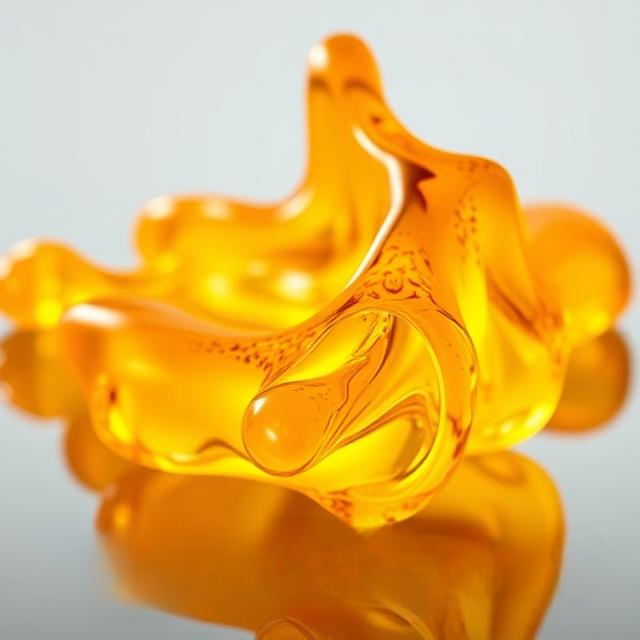
Crestafire P1-8001: Pioneering Sustainable Fire Safety with Bio-Based Resin
In an era where fire safety and environmental sustainability are paramount, innovative materials are reshaping industry standards. Crestafire P1-8001, a 100% plant-based, fire-retardant resin derived from sugar cane waste, offers a carbon-neutral solution for composite applications. With exceptional fire, smoke, and toxicity (FST) properties, this halogen-free, heavy-metal-free resin meets the stringent EN45545-2 HL3 requirements for rail applications when paired with compatible gelcoats. Its low environmental impact, VOC-free composition, and compatibility with natural fibers make it a game-changer for railway, construction, and public transportation sectors.
This blog post explores Crestafire P1-8001 in depth, covering its features, applications, technical specifications, and practical advantages, highlighting its role in advancing sustainable, fire-safe composite manufacturing.
About Crestafire P1-8001
Crestafire P1-8001 is a bio-based, fire-retardant resin engineered for contact molding techniques, such as hand lay-up and spray molding. Sourced entirely from sugar cane waste, it offers a carbon-neutral alternative to traditional resins without competing with resources used for food production. Its dark brown appearance and low viscosity (<5000 mPa.S) ensure ease of processing, while its exceptional FST properties achieve the prestigious HL3 rating per EN45545-2:2013. The resin’s non-toxic, VOC-free formulation and compatibility with natural and mineral fibers make it ideal for eco-conscious applications requiring robust fire safety and mechanical performance.
Key Applications
Crestafire P1-8001 is designed for non-structural and semi-structural composite components in industries where fire safety and sustainability are critical. Its primary applications include:
- Railway: Meets EN45545-2 HL3 standards, making it suitable for interior and exterior components like train seating, wall panels, and ceiling systems, ensuring passenger safety in high-risk environments.
- Building and Construction: Used in fire-resistant panels, cladding, and structural elements for public spaces such as schools, hospitals, and transit stations, complying with stringent building codes.
- Public Transportation: Enhances safety in buses, trams, and ferries with low-smoke, low-toxicity components like interior linings and partition walls, protecting passengers in confined spaces.
- Industrial Applications: Applied in protective covers and enclosures for equipment in high-risk settings, supporting operational safety and durability.
Its compatibility with contact molding techniques and natural fibers makes it adaptable to both small-scale custom projects and larger industrial production, addressing diverse manufacturing needs.
Key Features and Benefits
Crestafire P1-8001 combines sustainability with superior fire-retardant and mechanical properties, making it a standout choice for eco-friendly, safety-critical composites. Its bio-based composition and efficient processing deliver unmatched performance.
Key Features
- 100% Plant-Based: Derived from sugar cane waste, ensuring a carbon-neutral, sustainable resin matrix.
- Exceptional FST Properties: Achieves EN45545-2 HL3 rating with low flammability, smoke, and toxicity, ideal for rail applications.
- Halogen- and Heavy-Metal-Free: Enhances environmental safety and compliance with REACH regulations.
- VOC-Free and Non-Toxic: Promotes operator safety and reduces environmental impact during manufacturing.
- Versatile Fiber Compatibility: Works with natural fibers (e.g., flax, hemp, jute) and mineral fibers (e.g., E-glass, recycled carbon fiber) for sustainable composites.
- Robust Mechanical Performance: Offers 45–50 Barcol hardness, 60–70 MPa flexural strength, and 2.0–2.8 GPa tensile modulus.
- Low Water Uptake: Ensures durability in humid or outdoor environments.
- Efficient Processing: Supports low curing temperatures (80°C) and short cycle times, improving mold turnaround and part aesthetics.
- Extended Stability: Stable for 6 months under recommended storage conditions, facilitating logistics.
Environmental and Industry Relevance
Crestafire P1-8001 addresses the dual demands of fire safety and environmental responsibility in industries facing stringent regulations. Its bio-based, carbon-neutral composition aligns with global sustainability goals, reducing reliance on fossil-based resins while maintaining performance comparable to conventional phenolic resins. The resin’s low smoke and toxicity properties meet EN45545-2 HL3 standards, ensuring passenger safety in rail and public transport applications. Its VOC-free, non-toxic formulation minimizes workplace hazards and environmental emissions, while compatibility with natural fibers supports the creation of eco-friendly composites. The resin’s efficient processing, with low curing temperatures and fast cycle times, reduces energy consumption and production costs, contributing to sustainable manufacturing. From rail interiors to construction panels, Crestafire P1-8001 enables lightweight, durable, and fire-safe composites, fostering safer and greener public infrastructure.
Technical Specifications
Liquid Resin Properties
| Property | Value |
|---|---|
| Appearance | Dark Brown |
| Viscosity at 25°C | <5000 mPa.S |
| Water Content | 5.0–7.5% wt |
| Stability (from manufacture date, per storage recommendations) | 6 months |
Cured Resin Properties
| Property | Value |
|---|---|
| Hardness | 45–50 Barcol |
| Curing Shrinkage | 5–6% by volume |
| Deflection Temperature Under Load (1.80 MPa) | Under definition |
| Flexural Strength | 60–70 MPa |
| Flexural Modulus | 3.2–3.7 GPa |
| Tensile Modulus | 2.0–2.8 GPa |
Catalyst Cure System and Pot Life
| Cure System | Parts Resin | HM 1448 (65% wt) | H3PO4 (85% wt) | S-type+ (65% wt) | Pot Life (min) | Curing Cycle |
|---|---|---|---|---|---|---|
| 1 | 100 | 0 | 1 | 4 | 40 | 2 hrs @ 50°C + 8 hrs @ 80°C |
| 2 | 100 | 0 | 1 | 3 | 60 | 2 hrs @ 50°C + 8 hrs @ 80°C |
| 3 | 100 | 1.5 | 1 | 4 | 30 | 2 hrs @ 50°C + 8 hrs @ 80°C |
Notes:
- S-type+: 65 wt% Para-toluene sulfonic acid.
- H3PO4: 85 wt% Phosphoric acid.
- HM 1448: 65 wt% 2-hydroxyethyl ammonium nitrate.
- Additional catalyst formulations and curing cycles are available; technical support can provide tailored solutions.
Usage Guidelines
Preparation
- Ensure Crestafire P1-8001 reaches a workshop temperature of 18°C–20°C for optimal processing.
- Stir gently by hand or with a low shear mechanical stirrer to ensure uniformity without aeration.
- Add the specified acid catalysts (e.g., H3PO4, S-type+, HM 1448) as per the chosen cure system, mixing thoroughly with a medium/high shear mechanical stirrer to ensure dispersion.
Application
- Methods: Apply via contact molding techniques, such as hand lay-up or spray molding.
- Hand Lay-Up: Use a resin-to-fiber ratio optimized for natural or mineral fibers (e.g., 2:1 for flax or hemp). Apply evenly with rollers to minimize air entrapment.
- Spray Molding: Calibrate equipment for uniform application, ensuring consistent thickness for fire performance.
- Catalyst Addition: Select a cure system (e.g., Cure System 3 for 30-minute pot life) based on production needs. Mix catalysts thoroughly to achieve pot life of 30–60 minutes at 18°C–20°C.
- Lamination: Apply subsequent layers within 24 hours to ensure strong interlayer adhesion, with a minimum wait of 1–2 hours after initial application.
- Do:
- Maintain workshop temperature at 18°C–20°C.
- Use medium/high shear mixing for catalyst dispersion.
- Ensure reinforcements are contaminant-free for optimal bonding.
- Don’t:
- Add fillers or pigments, as they may compromise fire performance or mechanical properties.
- Use high shear mixers for resin stirring, as this can introduce air.
Post-Curing
- Cure using the recommended cycle (e.g., 2 hours at 50°C + 8 hours at 80°C) for optimal fire and mechanical properties.
- Allow components to cure at 20°C for 24 hours before post-curing to ensure initial stability.
Manufacturing Considerations
Crestafire P1-8001 is optimized for contact molding, offering efficient processing for sustainable composite production. Its low viscosity and water-based solvent (~4% w/w) enhance processability for hand lay-up and spray molding, while short cycle times and low curing temperatures (80°C) improve mold turnaround compared to phenolic resins. The resin’s compatibility with natural fibers like flax and hemp supports eco-friendly laminate designs, ideal for rail seating or construction panels. Manufacturers should calibrate spray equipment to achieve uniform application and use compatible gelcoats to enhance surface finish and fire performance. For outdoor applications, applying protective coatings post-molding improves UV and moisture resistance. Component-specific fire testing is essential to verify compliance with EN45545-2 HL3 standards, and technical support can assist with optimizing fiber ratios, catalyst formulations, and curing cycles for specific project requirements. The resin’s non-toxic, VOC-free nature ensures a safer working environment, reducing ventilation needs and operator exposure risks.
Storage
- Store between 5°C and 25°C in original, unopened containers in a dry, well-ventilated area.
- Protect from freezing, direct sunlight, and oxidizing agents.
- Shelf life is 6 months; storage outside these conditions significantly reduces stability.
Packaging
- Available in 27kg plastic kegs, 225kg drums, and 1100kg containers, accommodating various production scales.
Health and Safety
Refer to the Safety Data Sheet for detailed instructions on safe handling of Crestafire P1-8001 and its acid catalysts. While the resin is non-toxic and VOC-free, proper handling of acid catalysts is essential, requiring appropriate protective equipment and adequate ventilation.
Why Choose Crestafire P1-8001?
Crestafire P1-8001 redefines fire safety and sustainability in composites, offering a 100% plant-based, carbon-neutral resin that achieves EN45545-2 HL3 fire ratings for rail applications. Its exceptional FST properties, with low smoke and toxicity, ensure occupant safety in high-risk environments, while its halogen-free, VOC-free composition promotes environmental and operator safety. The resin’s compatibility with natural fibers and efficient processing, with low curing temperatures and short cycle times, enables eco-friendly, high-quality composites for rail, construction, and transportation.
With robust mechanical properties, including 60–70 MPa flexural strength and low water uptake, it delivers durable performance comparable to phenolic resins, but with better aesthetics and mold efficiency. Its sustainable sourcing from sugar cane waste aligns with global environmental goals, making it a forward-thinking choice for manufacturers aiming to meet stringent regulatory standards, reduce environmental impact, and enhance production efficiency. Crestafire P1-8001 empowers industries to create safer, greener public spaces with innovative composite solutions.
For further details or technical support, contact Scott Bader.
Disclaimer: All information is based on laboratory testing and is not intended for design purposes. We and Scott Bader makes no warranties regarding this data. Users are responsible for verifying the suitability of products for their specific applications. Availability may vary by region due to regulatory restrictions; contact your local Scott Bader representative for details. For more Information About Lubricants Visit Our Articles